Status: Writing on Chapter 146 of Starchild Duel. (Last one was Chapter 145. My bad! See? This is what happens when: A) You're me, and B) You've had nothing but 2 full months of nothing but bad luck left and right.)
Doing: Writing on this blog; answering e-mails; working out, and well...you know the rest! :0)
Watching: KING 5 DT CH 5.2; WEATHER PLUS
Listening to: "Passion's Killing Floor" by H.I.M.; "Visions" by Razed in Black
Reading: Kushiel's Scion. Page 252.
TOPIC: THE ROWLING LEXICON CONTROVERSY
Just so everyone knows, I'm feeling a lot better today. But boy...! Do I have a shit load of things to catch up on. MY WRITING INCLUDED.
I just got done pasting the Starchild of Ancient Lore into the ground in my latest chapter. (Trust me: She's going to be feeling much better later on--after she gets some quality nap time. :0) The battle with Cara Hastings (or Nemesis--as she likes to be called) has taken a much greater toll on the embattled surface dweller. And her boyfriend Bayen Yelou...?
Let's just say that he has his own problems at the moment. (Praetorial Guard issues as usual. It doesn't help their case much when a wide area of the Barren Wastelands gets annihilated in the process by the other stranded Starchild of Ancient Lore--as she was left to battle Cara on her own terms.)
Anyway...not to distract anyone from the reasons why I'm writing today, the issue surrounding J.K. Rowling and that website which some 50-year-old fan had created a lexicon around the whole entire Harry Potter universe is something which had only recently caught my attention. (Being sick doesn't help my case much.)
With his intent to publish what is on the website--which has roughly 1.5 million hits per month. (Or is it per day?)
And the kicker? It got a full endorsement from the writer herself. Not the publishing aspect, but the fact that she endorsed a website which took full advantage of the HP phenomenon.
And now--suddenly--Rowling's trying to sue this one fan to stop him from publishing what's already on the website!
So why the John Kerry-style flip-flops on Rowling's part? The full and undeniable fact that she wants full and uncontested control of her creation and life's work.
See, this is what I don't get. The most popular icons of the 20th century--from Green Gables to Star Trek, to The Blade Runner, Star Wars, and so on...get gobbled up by generations of fans alike.
We didn't hear George Lucas suing that group of fans for creating that one hour long--STAR WARS: REVELATIONS--episode 4 years ago. (Which was profiled on CBS News.)
So why take this issue to court? It's all about control.
"Fuck my fans and readers alike! I want TOTAL CONTROL!!!"--shouts J.K. Rowling; a.k.a: Queen Witch of the Known Universe. "None of you empty-headed peons have any rights to enjoy my work! I make the money, I make the damned rules around here!"
...
And right then and there, authors like Mrs. Rowling gets screwed in the long run over how people view her novels or any future releases that will bring on board new generations of dedicated readers.
Her book sales may not be in danger of going the way of the dodo, but her reputation and credibility gets taken down a notch.
See, this is the price of vanity which some established authors fall prey to in the long term.
They no longer see value in what their hard-won fan base has labored long and hard for--to pay homage to and give out to their respective readers as a bonus treat to some of the die-hard book worms (or movie buffs). At some point the allure and glitz dies down...and maybe it's age or something else that takes hold and the author of this and that book suddenly feels threatened by what he or she sees as treading on some unclaimed--personal--turf, and now...?
They have to make one big fucking stink over it. Given by what the creator of that lexicon site has said in his defense of his intent--you would think that Rowling would welcome such a move.
Because why? Nothing on the site distorts what the Harry Potter universe represents. It is just a collection of terms, dictionary eulogies, and lots of other fun facts based on Rowling's already published books.
So where's the fire? The fire is that one fan has one-upped Rowling's intent to do one compendium herself at some point before HP becomes a faded memory in the back of everyone's mind.
This man went and pissed all over what Rowling's grand plan to make what again...?
That's right kiddies!
MONEY!
LOTS AND LOTS OF MONEY! CABBAGE, BREAD, DOUGH, SCRATCH, MOOLA, WHATEVER YOU CALL THE GREENBACK, THIS IS WHAT SHE WANTS THE MOST.
Rowling created this massive money-making cash cow from the start about 11 years ago--with the first Harry Potter book--and now she wants to milk everything for what is worth--even at the expense of her fan base loyalties.
See, this is where I draw the line.
Copyright infringement and legalities aside, fans should reserve the right to go fucking nuts with the author's works--so long as there is no preverse scheme involved to take away the original vision set in place by the original creator or author.
The money making schtick involved in this pointed mess is something I'm still at odds over. If there is money to be made, the author should get the lion's share of the profits made from this little venture, while the creator of the said lexicon should get a modest repast for his efforts and hard work.
But the two of them should be working together on this, not fighting it in federal court.
That in itself would give fans like my wife a bit of a breather and not grant everyone a severe migraine over the issue of free creative license and who should benefit it the most.
Because--should the court rule on this--if things go awry and the judge decides that it's Rowling's sole inheritance to claim eminent domain over anything put out now or in the near future--it's going to make it damned impossible for anyone to rightfully enjoy what an an author puts out--because he or she is going to be afraid of being SUED or taken to court over fan-created works of interest; based on the original idea.
This means anyone--including the guys whom made STAR WARS: REVELATIONS--can be dragged into a court of law and sued for everything they got.
Because they happened to step on the toes of either the original author or the original creator/producer of said movie or book.
And that is going to freeze everyone's personal enjoyment of reading that book or watching that movie--because a federal judge said that fans everywhere have no rights to do anything that will upset the money-making status quos of the authors or anyone else.
As an unpublished author myself, I am a man of free will and free enterprise. As much as I want to make a sickening amount of money off of my books (a man can dream--can't he?)...I also have to realize that once the genie comes out of the bottle, it's virtually impossible to put back in.
Showing posts with label readers. Show all posts
Showing posts with label readers. Show all posts
Wednesday, April 16, 2008
Friday, March 7, 2008
FRIDAY'S QUIET MUSINGS
Status: On Vacation; goofing off--catching up on some things
Doing: Writing this blog; surfing the net; answering e-mails
Watching: "The Jim Lehrer Hour" on PBS
Listening to: "What I've Done" by Linkin' Park; "Doomsday Clock" by Smashing Pumpkins (The Transformers soundtrack)
Reading: Kushiel's Scion by Jacqueline Carey (Page 173)
TOPIC: HOOKING YOUR READER
I had this posted on another group when the issue of hooking your reader came into question. If this sounds like a rant--it's because I'm very passionate about these sort of things.
***
I don't bother with hooking the reader. I just start out with something that I hope the reader will find interesting--and just write the story however it pans out in the end.
Trying for the dramatic angle for a beginning is really stupid. It just shows how amateurish you really are.
You can't just drop right into the tension pool and expect people to eat it up with a spoon. You have to build up the moment to that moment.
So it takes your hero 5 full chapters to find what he's looking for. And?
So what!
Will it kill the reader a little if he's not bashing in skulls or performing a Matrix-like move to eradicate his foes at this very second? Nope. It doesn't matter.
He's looking for something important and so he must journey with himself and the reader to search for that one elusive item. But in the meantime, it's dark, it's scary, and he has zombies chasing after his ass every step of the way.
Does it matter if he's avoiding confronting them instead of dragging out a can of patented Whoop-Ass and using it on them in the first page?
Nope.
But the agent will say: "Why is he doing this instead of fighting them? Why isn't there any action?"
Because...? I'm writing it this way. Will you people chill out a little? The action will come when it comes. Not before, not after.
But impatience rues the day and agents are not known for their patience. Neither are publishers. So out goes the little "Dora the Explorer" angle and here comes Neo the Zombie Killer.
The journey of that character gets axed and here is a guy with some cool martial arts moves and an attitude like Rambo on Prozac. (Suicidal in case you're wondering.)
The zombies are dead meat in a split second and both the agent and publisher are happy and titilating with one orgasm after another.
No prose, no need for personal recollection. Just another MDK (Murder/Death/Kill--from "Demolition Man") in action and the reader gets all that more desensitized by what he or she reads as a result.
Oooh! Wow! That was so brilliant! All that hard work put in so that the industry can butcher it into a chain of books that has as much shelf life as your standard house fly.
But this is what they want. Everything marketable has no chance of hanging around. Too many books out there competing for fame, fortune, and a spot on a milk carton or that box of Wheaties one of these days.
And the sad thing is? Most books never make the cut. And those that do are so overdone in themes and lacking originality--that all they are are just boxed pieces of commercialism and nothing else.
Who needs to really write well when we have this to draw inspiration from?
It certainly takes the starch and fun out of exploring the worlds we all sit down to create. Y'know?
So the important thing is to remember that hooking your reader isn't dependent on that all important action scene or some commercialized ploy designed to draw in a targeted--or benchmarked--readership.
Having a hook isn't just about the first page either. Hooking a reader is about the whole book being presented as a single entity to your audience. By giving them more to chew on than a single sentence, or a prospective fight scene--you're allowing the reader a change to absorb and assimilate their next favorite read.
And in order to do that you have to start embracing risk and shuck off what the industry tells you to do without question. Show your reader what your book is about by giving them every little bit and piece. In steps--if you want.
Over time.
Hook them through your words, your characters, and your ongoing storyline--not just what the first paragraph says or what the first five pages read like.
If the agents want to play mind games with your work, then tell them to go Cheney themselves. This is your book, right? So shouldn't you have the final say in what's in it that will interest the reader?
Why destroy yourself because the industry doesn't want you to hook your reader in your own right? Just becaused you're a beginner, it doesn't mean that you have to give up your rights to personal imput--because some agent tells you: "This is the way it's always been done." (Yes...maybe back in the 1960s!...what year and century is this again?)
Tell them that if they don't like it, they are free to find some other sucker author is more than willing to play the role of a complete kiss-ass.
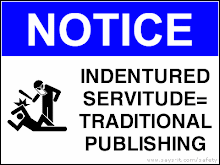
People, being published traditionally revolves around two things: Money and control.
Control over your work. Control over YOU.
You want to be sheep to these individuals, then wear a fucking bell around your neck and go, "Baa-aaah!"
You want to take control of your own destiny, then look these people in the eyes and tell them that they can take a walk off a very short pier.
You want money, you want the fame, the fortune, and the whole ball of cheese? Then you're going to have to work for it!
Stop looking for the easiest ways out and start taking more risks with your life and your work as a writer!
If you want to hook your readers than you'd better start writing more than just a fancy-schmancy, snazzed up paragraph that begins with the words: "It was a dark and stormy night..."
Think about what you're writing and who you are intended it for. Most people I've run across say they are writing for their audiences. But boy oh boy...! Are they going to be fucking disappointed in the long run.
Especially when they find out that their target audience has moved on to bigger and better reads.
Wanna know a safer bet? Write for yourself. I can't stress this often enough. Sure, it won't bring in as much recognition, fame, or a publisher's contract. But you want to know what I found all this time? By doing it myself?
I didn't come away disappointed with the results.
My works have come away stronger, better organized, and more interesting than their previous first-gen counterparts.
And the hooks within aren't buried in the first paragraph, the first page, or even the first five pages either.
But the whole book!
The whole book should be your hook. The whole book should be more than enough to entice your reader to want to know more.
You can't do that with such scant information, a limited pitch spiel or a restricted time frame.
Readers these days are going to want to know the whole kit and kaboodle. They aren't satisfied with just being thrown tidbits anymore. And as much as the industry, some hawk of theirs, or someone else is going to tell you otherwise--these days, you have to constantly adapt and evolve the art of hooking your reader with your published books.
And the best way to go about doing that is by getting them involved from the start.
Show them everything there is about your novel. Not just the parts you think will guarantee a future sale. Every element written in has a part to play in your overall success as a published writer.
Most experts will commonly tell you to fixate yourself on just one thing and one thing only. In order to hook your reader, you have to go beyond the first page of your novel.
Show your reader what lies in store for your hero or heroine. Show them what they are up against. Tell them that what kind of a rough ride they are going to encounter as the novel unfolds.
Offer them personal insights and tragedies into your respective characters. Show them their victories and their failures. Happy endings or not.
Don't be afraid to immerse your reader into your own work. That helps them stay engaged with you every step of the way.
This helps you secure future sales against whatever advance you may get.
Because people will remember you and go, "Hey! I know that guy! He's got a great book coming out!"
And from there, he or she will go on so avidly about it, interest in your published tome will pick up in no time.
All because of how you hooked your reader.
Sky
Doing: Writing this blog; surfing the net; answering e-mails
Watching: "The Jim Lehrer Hour" on PBS
Listening to: "What I've Done" by Linkin' Park; "Doomsday Clock" by Smashing Pumpkins (The Transformers soundtrack)
Reading: Kushiel's Scion by Jacqueline Carey (Page 173)
TOPIC: HOOKING YOUR READER
I had this posted on another group when the issue of hooking your reader came into question. If this sounds like a rant--it's because I'm very passionate about these sort of things.
***
I don't bother with hooking the reader. I just start out with something that I hope the reader will find interesting--and just write the story however it pans out in the end.
Trying for the dramatic angle for a beginning is really stupid. It just shows how amateurish you really are.
You can't just drop right into the tension pool and expect people to eat it up with a spoon. You have to build up the moment to that moment.
So it takes your hero 5 full chapters to find what he's looking for. And?
So what!
Will it kill the reader a little if he's not bashing in skulls or performing a Matrix-like move to eradicate his foes at this very second? Nope. It doesn't matter.
He's looking for something important and so he must journey with himself and the reader to search for that one elusive item. But in the meantime, it's dark, it's scary, and he has zombies chasing after his ass every step of the way.
Does it matter if he's avoiding confronting them instead of dragging out a can of patented Whoop-Ass and using it on them in the first page?
Nope.
But the agent will say: "Why is he doing this instead of fighting them? Why isn't there any action?"
Because...? I'm writing it this way. Will you people chill out a little? The action will come when it comes. Not before, not after.
But impatience rues the day and agents are not known for their patience. Neither are publishers. So out goes the little "Dora the Explorer" angle and here comes Neo the Zombie Killer.
The journey of that character gets axed and here is a guy with some cool martial arts moves and an attitude like Rambo on Prozac. (Suicidal in case you're wondering.)
The zombies are dead meat in a split second and both the agent and publisher are happy and titilating with one orgasm after another.
No prose, no need for personal recollection. Just another MDK (Murder/Death/Kill--from "Demolition Man") in action and the reader gets all that more desensitized by what he or she reads as a result.
Oooh! Wow! That was so brilliant! All that hard work put in so that the industry can butcher it into a chain of books that has as much shelf life as your standard house fly.
But this is what they want. Everything marketable has no chance of hanging around. Too many books out there competing for fame, fortune, and a spot on a milk carton or that box of Wheaties one of these days.
And the sad thing is? Most books never make the cut. And those that do are so overdone in themes and lacking originality--that all they are are just boxed pieces of commercialism and nothing else.
How much money did I waste again for buying this piece of crap?
So when we talk about hooks, my eyes glaze over and my head does that thing from the "Exorcist" or "Beetle Juice"--and I'm like, "Oh goody! Let's all do our readers in with senseless gore and violence!"Who needs to really write well when we have this to draw inspiration from?
It certainly takes the starch and fun out of exploring the worlds we all sit down to create. Y'know?
So the important thing is to remember that hooking your reader isn't dependent on that all important action scene or some commercialized ploy designed to draw in a targeted--or benchmarked--readership.
Having a hook isn't just about the first page either. Hooking a reader is about the whole book being presented as a single entity to your audience. By giving them more to chew on than a single sentence, or a prospective fight scene--you're allowing the reader a change to absorb and assimilate their next favorite read.
And in order to do that you have to start embracing risk and shuck off what the industry tells you to do without question. Show your reader what your book is about by giving them every little bit and piece. In steps--if you want.
Over time.
Hook them through your words, your characters, and your ongoing storyline--not just what the first paragraph says or what the first five pages read like.
If the agents want to play mind games with your work, then tell them to go Cheney themselves. This is your book, right? So shouldn't you have the final say in what's in it that will interest the reader?
Why destroy yourself because the industry doesn't want you to hook your reader in your own right? Just becaused you're a beginner, it doesn't mean that you have to give up your rights to personal imput--because some agent tells you: "This is the way it's always been done." (Yes...maybe back in the 1960s!...what year and century is this again?)
Tell them that if they don't like it, they are free to find some other sucker author is more than willing to play the role of a complete kiss-ass.
People, being published traditionally revolves around two things: Money and control.
Control over your work. Control over YOU.
You want to be sheep to these individuals, then wear a fucking bell around your neck and go, "Baa-aaah!"
You want to take control of your own destiny, then look these people in the eyes and tell them that they can take a walk off a very short pier.
You want money, you want the fame, the fortune, and the whole ball of cheese? Then you're going to have to work for it!
Stop looking for the easiest ways out and start taking more risks with your life and your work as a writer!
If you want to hook your readers than you'd better start writing more than just a fancy-schmancy, snazzed up paragraph that begins with the words: "It was a dark and stormy night..."
Think about what you're writing and who you are intended it for. Most people I've run across say they are writing for their audiences. But boy oh boy...! Are they going to be fucking disappointed in the long run.
Especially when they find out that their target audience has moved on to bigger and better reads.
Wanna know a safer bet? Write for yourself. I can't stress this often enough. Sure, it won't bring in as much recognition, fame, or a publisher's contract. But you want to know what I found all this time? By doing it myself?
I didn't come away disappointed with the results.
My works have come away stronger, better organized, and more interesting than their previous first-gen counterparts.
And the hooks within aren't buried in the first paragraph, the first page, or even the first five pages either.
But the whole book!
The whole book should be your hook. The whole book should be more than enough to entice your reader to want to know more.
You can't do that with such scant information, a limited pitch spiel or a restricted time frame.
Readers these days are going to want to know the whole kit and kaboodle. They aren't satisfied with just being thrown tidbits anymore. And as much as the industry, some hawk of theirs, or someone else is going to tell you otherwise--these days, you have to constantly adapt and evolve the art of hooking your reader with your published books.
And the best way to go about doing that is by getting them involved from the start.
Show them everything there is about your novel. Not just the parts you think will guarantee a future sale. Every element written in has a part to play in your overall success as a published writer.
Most experts will commonly tell you to fixate yourself on just one thing and one thing only. In order to hook your reader, you have to go beyond the first page of your novel.
Show your reader what lies in store for your hero or heroine. Show them what they are up against. Tell them that what kind of a rough ride they are going to encounter as the novel unfolds.
Offer them personal insights and tragedies into your respective characters. Show them their victories and their failures. Happy endings or not.
Don't be afraid to immerse your reader into your own work. That helps them stay engaged with you every step of the way.
This helps you secure future sales against whatever advance you may get.
Because people will remember you and go, "Hey! I know that guy! He's got a great book coming out!"
And from there, he or she will go on so avidly about it, interest in your published tome will pick up in no time.
All because of how you hooked your reader.
Sky

Thursday, January 10, 2008
THURSDAY'S MUSINGS. (PART 2)
Status: Writing Chapter 16 to Stories of the Dead Earth-Book 3: Jasper
Doing: Writing this blog; surfing the net; answering e-mails; working out
Watching: Nothing at the moment. (News hasn't started.)
Listening to: "Sugar Steps" by Kama Sutra; Visions of Ibiza--Disc 1.
Reading: Kushiel's Scion by Jacqueline Carey (Page 123)
TOPIC: BUCKING THE TREND
As I discussed earlier at the beginning of the last entry, there are people out there who want to either sanitize or severely trim my books so that they read better, sound better, and yadda, yadda, yadda.
I remember coming across someone yesterday in one of my writer groups; telling everyone that her book was 195,000 words, but she managed to get it down to 120,000.
She said that it sounded better, read better, and was more "action-packed".
The sad thing about this example is this writer may not even know her own true potential--if she keeps axing out all the important parts to her novel; if she keeps streamlining her work to fit a standard template for publishing.
I've seen this many times over the years, where writers have novels ranging from 150K to as much as 300K--but in the end...?
They end up taking so much out of it.
And for what? To fit in?
The point of being a writer isn't to destroy what you've gone and created for the sake of money, the premise of being traditionally published, and the potential to become one of those famous authors who can live independently on their own self-absorbed income.
The point is to tell a story. To build a foundation for yourself and your work.
Naturally, I have people tell me that I cannot hold onto everything I write, but I do--because I am telling a story. Not just writing a novel.
The use of words is more than just an illustrious example of going for the Big Cheese and impressing your peeps on the internet.
We use them to express ourselves, to illustrate our creations, and most importantly--to tell a story.
But if we strive to limit ourselves in our pursuits of that, then we limit ourselves in our own potential as a writer.
How do we profess to be published authors, if we continue to take out the most important parts to our novels--by toning down our words, trimming out every bit of prose and replace it with choppy; non-connected sentences and phrases?
It may look good and passable to the untrained eye, but for those of us whom write and weave our tales into telling tomes which enrapture our respective audiences...?
Inside, I'm screaming!
For example?
In my first generation version of The Starchild, there is a scene between Isis and Bayen at a place called Observation Park.
This is the first opening sentence to it:
"...it was the most breathtaking place she had ever been to. The trees in the park gave way to a translucent dome that showed a panorama of stars and a pure white moon..."
To anyone reading this, this would sound okay, right?
Wrong!
This opening paragraph just sucks! Why? Because it doesn't show anything!
It doesn't go into depth, doesn't express the whole feeling of actually being there, and doesn't impart anything important to the reader.
It lacks detail, it lacks depth, and it lacks impact.
But this example is what publishers want for their books! Overall, the majority of the novels we read today are done in this particular format.
This streamlined example is what goes into most writers' exposes when they complete their books.
Here is the updated version to that same scene. And while you may instantly notice that there is no mention of the dome, the trees, or the stars in the opening scene, most of what went into Observation Park's description had been taken out for something more sublime and easier to assimiliate:
"...The very second the doors opened, Isis felt like she was walking into another world. From her point of view, that’s exactly what it was. And this raw sense of feeling left her breathless as a result..."
What's changed between the two examples? Quite a bit!
In the 10 years since this book was completed, the style and voice in which I had been stuck with had suddenly transformed into something which exudes more confidence, more imagination, and more emotion.
The first opening words to the first example: "...it was the most breathtaking place she had ever been in..."--had been replaced with, "...the very second the doors opened, Isis felt like she was walking into another world..."
4-5 years ago--this particular change had taken place because I had started to see things differently about the way I was writing. It wasn't something which I was desperate for, but it was a natural evolution in my abilities and writing.
And I took that opportunity in May of 2003 to reconstruct The Starchild completely from scratch by rewriting the 2nd draft version into something new.
But this new version was much different than the old-version. The old version was more compact, more direct--and didn't offer the reader a chance to do much of anything--except to plow right through the novel at a breakneck pace.
This second example illustrates how my writing style transformed into something else. Something which is lacking in the current media mainstream of novels.
The first example only used 2 short sentences to describe the opening scene (which was on page 105 of the first draft), and didn't use more than one powerword to impact the reader with. (Breathtaking)
The second rough example used three sentences to revamp the opening scene with (which was on page 480 of the third draft). But they aren't short sentences either. They are elaborately spun pieces of prose.
By drawing out the scene into something the reader can picture inside their heads, the reader can get a good, solid grasp of what's really going on.
This isn't what publishers really are after. They want books that are quick and to the point. Namely because readers these days have woefully short attention recall, and the older generation of readers aren't reading as much as they used to. (Not to mention that teens these days are spending more of their reading time on the 'net, on their games, and other techno-distractions--that reading has become something of a lost 'art' these days.)
The second example also uses a revamped version of breathtaking by using the word breathlessly to describe an emotional state.
When was the last time your character freely expressed themselves in one manner or another--rather than just blindly rushing through the whole scene or the process altogether?
Dollars to doughnuts, they haven't. And if they have, the moment in question was much too fleeting to pay it any mind; for both the author and the reader.
Oddly enough, I find that the second example needs some further tweaking--which is yet another clear example of my abilities evolving further still.
But...
The second example has been transformed from what was a bland form of writing into a more emotional core platform which gives Isis McGowan a sense of realism and physical presence.
Which the first example clearly lacked.
This is what is meant by "bucking the trend" in writing.
By doing something which rubs against the grain of conventional thought and due process.
This is what the industry and many of my critics are so dead set against wanting to see happen.
Being traditionally published may be good and all for the aspiring writer whom craves nothing more than their 15 minutes of fame, but what it will always boil down to is whether or not that published plebe has the ability to convey themselves well as a master story-teller.
Doing a rush job on the whole thing won't get any of us any closer to our said goals. Because once you write something and complete it, you really aren't finished with the project in question.
You're just starting a process that only scratches the surface.
If you really want to shine, then you have to really grasp what you've written. Not just how well it reads to you, but every little crack, every little nuance--until (at some point)--you're really certain that this is what you first envisioned when you started out.
Because if it isn't...?
Then you still have a lot of work ahead of you until you do.
And that's the truth.
Subscribe to:
Posts (Atom)